.webp&w=96&q=75)
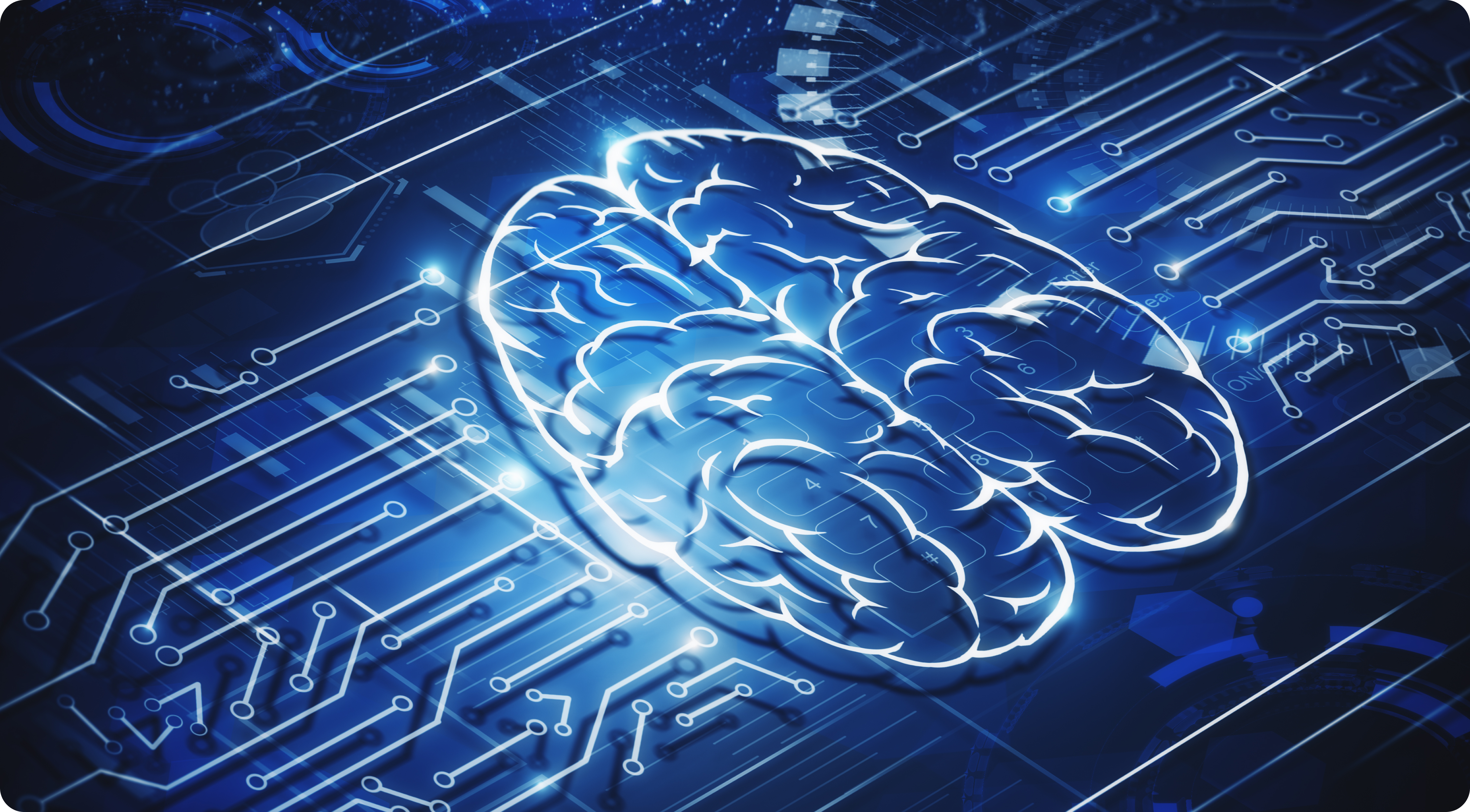
Spend a day inside any risk adjustment department and you’ll see the same pattern. Coders aren’t struggling because the charts are long — they’re struggling because the “AI” tools meant to help them aren’t built for the work they’re being asked to do. Instead of reducing effort, most platforms push coders into a cycle of verifying questionable recommendations, hunting for missing MEAT criteria, and correcting logic that should never have been wrong in the first place.

This isn’t a failure of coders.
It’s a failure of architecture.

Most AI systems used today rely heavily on traditional NLP or generic LLMs that were never designed for HCC coding, clinical reasoning, or the nuances of CMS risk adjustment. Many top out at 70% accuracy on real-world charts. Even the most advanced healthcare LLMs in the market still struggle to cross 80% without extensive human review.

For teams working under RADV pressure, that gap between 80% and the 95–98% needed for defensible submissions creates more work, more rejections, and more stress.

Encipher Health approaches the problem differently.
 Our platform uses Neuro-Symbolic AI — an architecture that blends neural language understanding with rule-based clinical logic. That combination is how Encipher Health consistently delivers 97%+ accuracy out of the box, without needing to train on your charts.

But before explaining why this technology matters, it's important to understand why traditional NLP and LLM-only models fail so consistently
HCC coding requires more than reading comprehension. A system must understand clinical context, timelines, intent, and documentation rules.

It needs to be able to:
This isn’t pattern recognition — it’s structured medical reasoning.
And this is exactly where traditional NLP and generic LLM models fall apart.
Most of the AI tools in the market today fail for reasons that have nothing to do with training data and everything to do with design. Here are the five issues coders run into over and over:
Real charts aren’t clean. Providers dictate quickly, mix past and present tense, and use shorthand that varies by specialty. Traditional NLP engines — built for structured text — often hit a ceiling around 60–70% accuracy because they can’t reliably parse long, unstructured narrative notes.
LLMs generate answers based on probability, not medical rules. If the documentation is vague, they fill in the gaps. This leads to:
A hallucinated code might look harmless in a demo, but it becomes a major liability in a RADV audit.
Most LLMs can only hold a limited amount of text in memory at once. When reviewing an 80-page chart:
This results in fragmented, unreliable HCC identification.
Even when an LLM understands the language, it doesn’t understand:
LLMs “read,” but they don’t reason.
This leads to undercoding, overcoding, or incorrect HCC assignments.
Coders need to know:
“Where is the evidence for this code?”

Most LLM-only systems can’t:
Without a transparent evidence chain, the AI becomes a black box — unacceptable for compliance.

Individually, each failure slows coders down. Together, they create low trust, excessive rework, unpredictable accuracy, and audit risk. This is exactly why Encipher Health does not rely on traditional NLP or generic LLMs alone
When these tools fail, vendors often recommend giving them more charts to “learn from.”But more data does not fix architectural limitations.

If a model:
Then feeding it more examples only helps it make more confident mistakes.

Then feeding it more examples only helps it make more confident mistakes.
 The fundamental issue isn’t the data — it’s the design.
Even when an LLM understands the language, it doesn’t understand:
Handles what LLMs are good at:
This layer reads like a human.
This is the engine that gives Encipher Health its accuracy.
It includes:
This is why Encipher Health reaches 97%+ initial accuracy without needing to be trained on your charts.

No months-long custom training.
 No months-long custom training.
No slow rollout.
 It works immediately.
This is why Encipher Health reaches 97%+ initial accuracy without needing to be trained on your charts.

No months-long custom training.
 No months-long custom training.
No slow rollout.
 It works immediately.
With Encipher Health, coders are not replaced — they’re elevated.

Instead of spending hours searching for documentation or correcting the AI’s mistakes, they step into roles like:
Routine work is handled correctly on the first pass.
 Coders focus on the exceptions.

This is how organizations that adopt Encipher Health can process 4–5x more charts without increasing staff — and with far better coder satisfaction.
Retrospective:
Accurate cross-note reasoning and deep evidence validation.
Concurrent:
Real-time suggestions inside the encounter, with zero hallucinations.
Prospective:
Identification of future risk gaps and care opportunities.

Traditional NLP cannot handle all three.
Generic LLMs struggle with even one.
Neuro-Symbolic AI makes all three reliable.
Here are the questions every risk adjustment team should ask:
Encipher Health can answer these questions clearly — and without disclaimers.
The industry has reached the point where NLP and generic LLMs cannot meet the demands of real risk adjustment work. Most solutions force coders to fix the tool’s mistakes rather than benefit from automation.

Encipher Health’s Neuro-Symbolic AI changes that.
It delivers accuracy that holds up under audit, handles long charts without losing context, validates MEAT, and applies coding rules the way experienced coders do.

With 97%+ out-of-the-box accuracy, transparent evidence trails, and support for retrospective, concurrent, and prospective workflows, it becomes more than a suggestion engine — it becomes a true extension of your coding team.

The organizations that thrive won’t be the ones trying to replace coders with AI.

They’ll be the ones giving coders technology that finally works.


Here are SEO-optimized meta tags, heading tags, and hashtags for your blog titled:“Why HCC Coding Needs More Than NLP: A Deep Dive Into Neuro-Symbolic Automation”

Everything follows best practices for healthcare AI, value-based care, HCC coding, and risk adjustment SEO.
AI Powered Medical Coding Intelligence

© 2026 Encipher Health Inc. All rights reserved.

1007 N Orange St. 4th Floor
Ste. 1382 Wilmington, New Castle,
DE- 19801

+1 (302) 353-1211
Don't Miss Out on Important News and Insights.